Search This Blog

Thursday, 30 August 2018

Generation of computer

Computer Generation:-
The history of the development of computer is often referred to in tracing the different generation of computing devices. Each generation of computer is characterized by a major technological development that fundamentally changed the way computers operate, resulting in increasingly smaller, cheaper, more powerful and efficient and reliable devices.
First Generation:-(1942-1955)
The first generation computer were entirely electronic. They used vacuum tubes to store instructions. Magnetic drums were used for memory. They were often enormous, taking up entire rooms.They were very expensive to operate and,in addition to using a great deal of electricity, generated a lot of heat which often needed expansive air-conditioning. First generation computer relied on machine language (1s and 0s),the lowest-level programming language understood by computers, to perform operations, and they could solve only one problem at a time.
*The UNIVAC 1,ENIAC and Mark1 computers are example of the first-generation computing devices. The UNIVAC was the first commercial electronic computer

Second Generation:-(1955-1964)
In second generation of computer solid state transistor replaced vacuum tubes in computer.The transistor was far superior than the vacuum tubes, allowing computers to become smaller, faster, cheaper, more energy-efficient and more reliable. To represent date a magnetic core is used in computer. At about the same time magnetic tape and disks began to be widely used as an auxiliary storage. Magnetic disk was layered by iron oxide. Magnetic disks made possible direct access of data.
                             As a result of these developments,a significant increase in the speed and processing capability of computers was achieved. Businessman began to use computer in increasing number and new high-level programming languages also developed at this time, such as early versions of COBOL and FORTRAN.
Third Generation:-(1965-1971)
Further development in electronics brought further reduction in size, greater reliability, speed and lower coat computer. Integrated circuits (IC)replaced the transistors, which was developed by J.S.Kilbi. this was the hallmark of the third generation of computer.
                                            This development is known as LSI(large scale Integration) and it refers to the ability to compress large number of integrated circuits on a single silicon Chip. There is also VLAI(very Large Scale Integration).
                                                             Users interacted with third generations computers through keyboards and monitors and interfaced with an operating system, which allowed the devices to run many different applications at one time with a center program that monitored the memory.
Fourth Generation:-(1971-1980)
Fourth Generation computer continued to be characterized by chips that can contain increasing numbers of items.this further miniaturization of components, referred to as ULSI( Ultra Large Scale Integration), resulted in Increased speed,greater reliability, and enormous storage capacities for current computers.
                  By using LSI technology,microprocessor was produced. This microprocessor brought the fourth generation of computers, as thousands of integrated circuits were built onto a single silicon Chip.
           As these small computers became more powerful,they could be linked together to form a network, which eventually led to the development of the internet.fourth Generation computers also saw the development of GUIIs,the mouse and handhold devices.
Fifth Generation:-(1980-till now):-
Unlike all other generation computers, present generation of computers is characterized by the use of the technique used to reduce complex programming. This technique is known as Artificial intelligence (AI) . Fifth generation computing devices, based on artificial intelligence, are still in development, though there are some applications, such as voice recognition, that are being used today.


Tuesday, 21 August 2018

Development of computer

Introduction:-
Computer is man-made electronic machine that changes the way we work, live ,and play. A machine  that has done all this and more, now exists in nearly every business and one out of every two households. This incredible invention is the computer. The computer is one of the most powerful innovations in human history. The electronic computer has been around for 2000 years. The computer has changed nearly aspect of People's lives for the better. With the use of computer, people are suddenly able to perform a large amount of computation at dazzling speed. Information can be crunched, organized, and displayed in the blink of an eye. Things that were only dreams a few years ago are now possible due to computer.
Evolution of computer:-
1.Abacus:--The abacus is one of earliest known computation devices. It is a tool that helped in calculating answers of arithmetic problems. The abacus was developed in china about 5000 years ago. The abacus was so successful that its use spread from china to many other countries.
2.Pascal Calculator:-The first real mechanical calculator was invented by a French scientist and mathematician Blaise Pascal, around 1645.in this machine only number 0 to 9.it was only able to addition and subtraction, so it is called adding machine
3.Analytical Engine:-In1820 Charles Babbage, a British mathematician and inventor, designed and built the mechanical on principals that anticipated the modern electronic computer. The concept  Babbage put forward was eventually used by engineers in the development of the first computer prototype. For this reason Charles Babbage is known as the "Father of computer". Despite ten years of work ,Babbage failed to built a fully operational model of difference or Analytical Engine. In 1842 lady love lace wrote a demonstration program AMD her contribution to binary arithmetic was later used by John Bon Neumann in developing the modern computer. So she is often regarded as "first computer programmer".
4.Herman Hollerith and punch cards:-In 1890 the united states census Bureau asked Hermam Hollerith to find a way to speed up the processing a cenesus data. Hermam Hollerith created punched cards that resemble today's computer cards.
5.First Electronic computer (ENIAC) :An American engineer, proposed an electronic digital computer, called the Electronic Numerical Integrator And computer (ENIAC), and completed it in 1946 which is regarded as the first successful general Digital computer.
6.Stored Program Concept (EDSAC) :-This concept was incorporated into the EDSAC computer (Electronic Delay Storage Automatic Computer), which is developed at Cambridge university. This computer was capable of storing a sequence of instructions, the equivalent of the first computer program.
7.UNIVAC:-It is the short from of Universal Automatic Computer. In 1951 it was introduced and became the first commercially available computer. The UNIVAC 1 was characteristics of the first generation of computer. 

Sunday, 19 August 2018

दिवाली से पहले लॉन्च होगा जियो ब्रॉडबैंड, इंटरनेट के साथ देख सकेंगे TV कार्यक्रम

           जियो का बडा एेलान:-
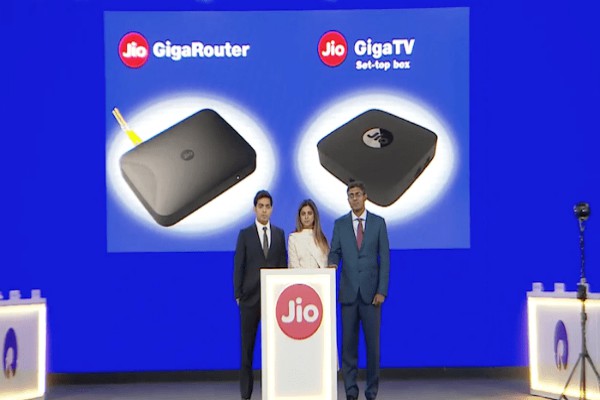
 रिलायंस जियो बड़े पैमाने पर बाजार को कवर करने के लिए करीब 500 रुपए में एक हाई-स्पीड इंटरनेट आधारित टेलीविजन प्रोग्रामिंग के साथ ब्रॉडबैंड सर्विस को लॉन्च करने के लिए तैयार है। इस सर्विस की कीमत प्रति माह 500 रुपएे होगी 

दिवाली से पहले लॉन्च होगी सर्विस
मुकेश अंबानी की कंपनी रिलायंस जियो दिवाली (7 नवंबर) से पहले 'जियो गिगाफाइबर' को लॉन्च कर सकती है। शुरु में यह सर्विस मेट्रो शहरों में लॉन्च की जाएगी जहां मांग अधिक है। सर्विस की उपलब्धता 15 अगस्त से पंजीकरण शुरू होने की संख्या पर निर्भर करेगी, यानी जिस क्षेत्र में अधिकतम संख्या में लोग पंजीकृत होंगे, वहां सर्विस पहले मिल जाएगी।

PunjabKesari

जियो का पैक होगा सस्ता 
केबल ऑपरेटरों के ब्रॉडबैंड पैक की तुलना में जियो पैक लगभग आधा सस्ता होगा।केबल ऑपरेटरों द्वारा दिए जा रहे होम ब्रॉडबैंड पैक काफी महंगे हैं। मौजूदा समय में 100 जीबी डेटा पैक के लिए 700 रुपए से लेकर 1,000 रुपए तक प्रति माह शुल्क लिया जा रहा है जबकि टीवी सेवाओं के लिए 250-300 रुपए अतिरिक्त शुल्क लिया जा रहा है। जियो हाई स्पीड ब्रॉडबैंड इंटरनेट टीवी का मजा एक ही पैक में देने जा रहा है।जियो का लक्ष्य सस्ती सर्विस के साथ अधिक से अधिक लोगों को आकर्षित करना है। विश्लेषकों का मानना है कि जियो की ब्रॉडबैंड सर्विस 4जी मोबाइल ब्रॉडबैंड से भी सस्ती होगी।

PunjabKesari

About as computer

The invention of computer is one of the greatest feats of modern science and technology. It control almost every sphere of life and has made cheerful. The credit of inventing this wonderful instrument goes to Charles Babbage,a British scientist.
A computer is nothing but a kind of small electronic machine with the help of which different things can be done easily, accurately and quickly within a very short time.In the beginning, it was mainly used in accounting for getting correct information.
                                       In world, computer is used widely in space research centres, laboratories, industries, hospitals, airports, railway stations, banks, offices,shops, schools and colleges.It alse helps students and teachers in learning and teaching history, geography and science very easily and in an interesting manner. The density of computer has  increased manifold in India,yet the day,of course, is far when every house in India will have a computer with a display board.
                                                                       Computer has done a great deal in achieving the modern progress. It is evident that it will soon mould the shape of human civilization.